
02 Dec 2025
Abstract
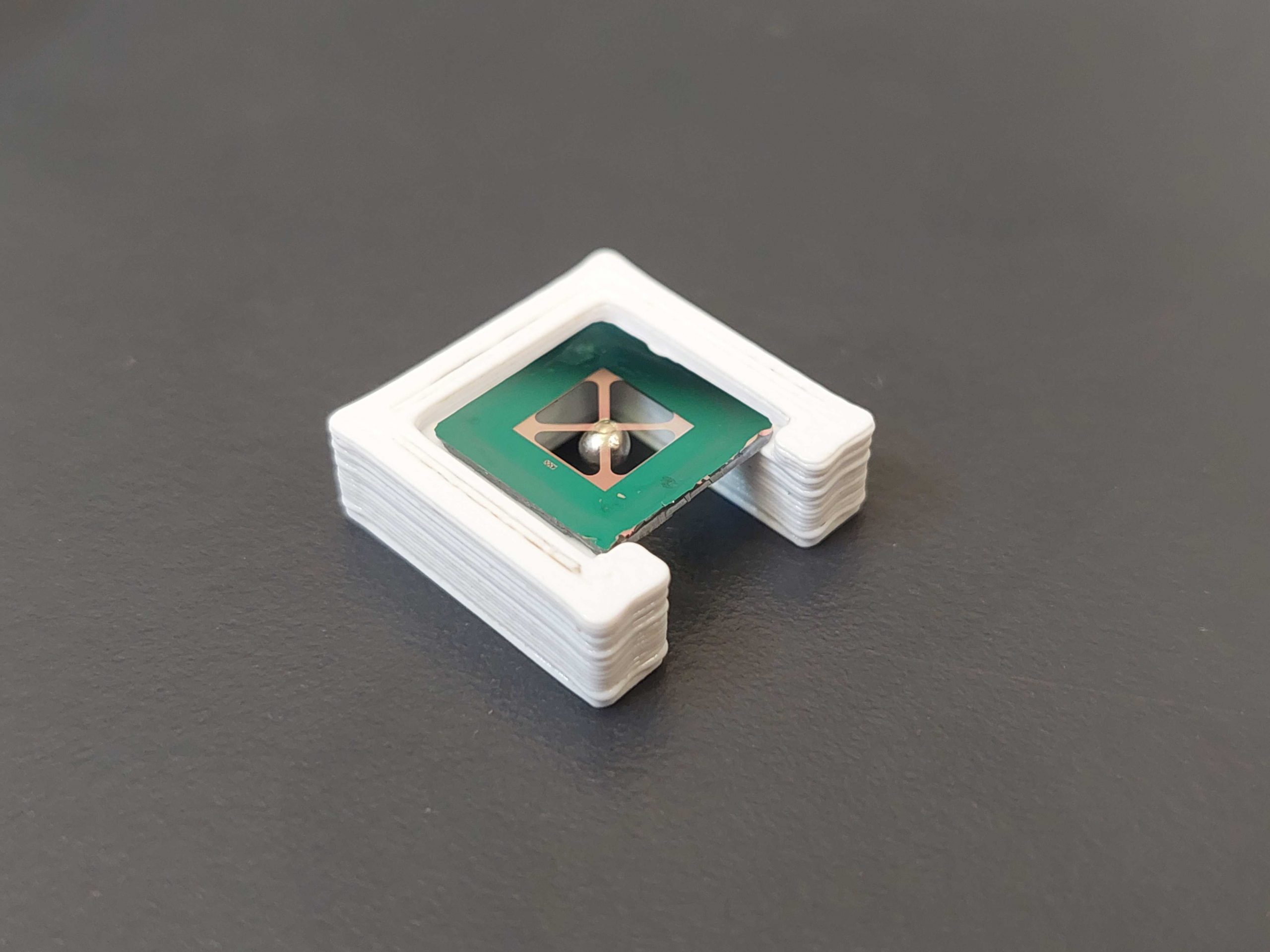
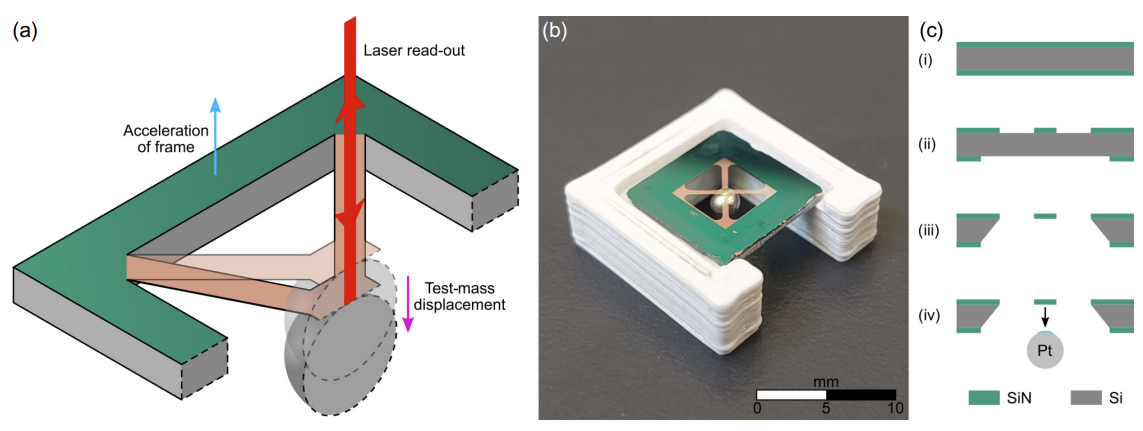
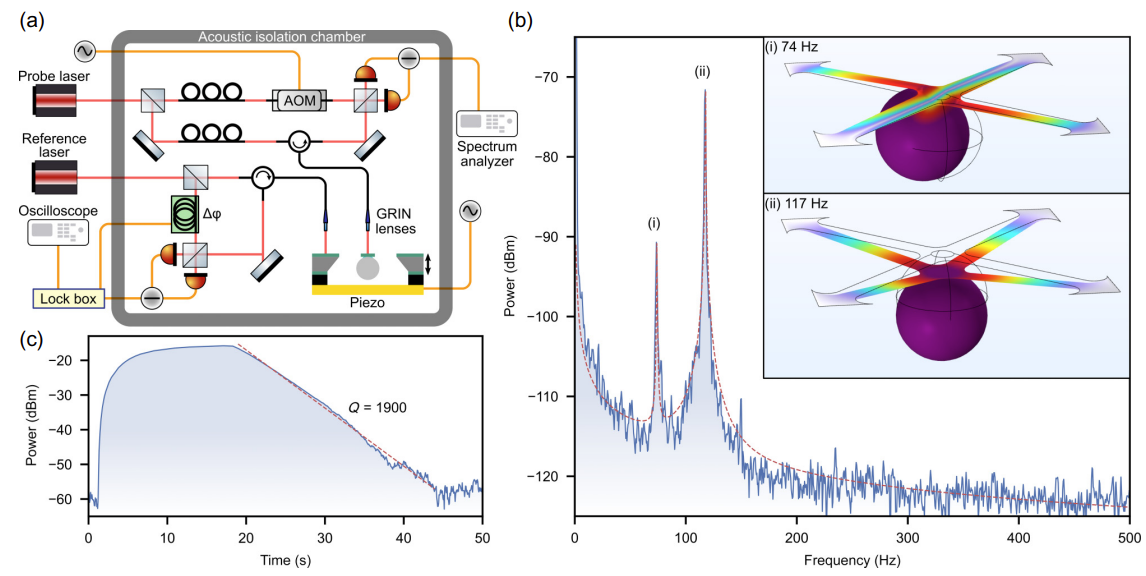
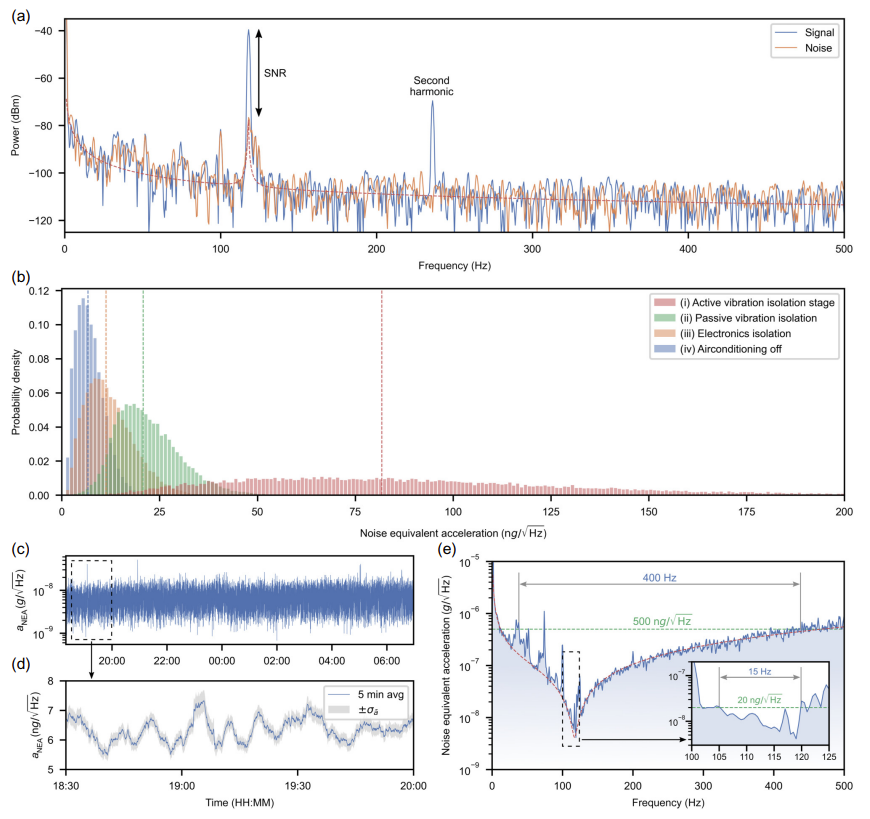
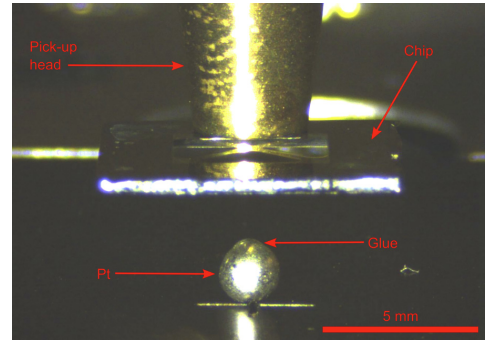
Accelerometers offer motion-sensing capabilities across a wide range of areas, enabling navigational awareness in consumer goods and defense applications, and playing a key role in monitoring and control systems. To date, on-chip accelerometers have largely utilized a single device layer or substrate as a test mass. This constrains the test mass to the dimensions and density of the device layer or substrate, ultimately limiting the sensitivity of the device. We demonstrate an alternative approach, which utilizes a pick-and-place bonding technique to increase the test mass of an on-chip accelerometer. By bonding a high-density platinum sphere to a nanomechanical silicon-nitride trampoline membrane, we achieve a quality factor of 1900 in air with 95-mg test mass, corresponding to a thermomechanical noise-limited acceleration sensitivity of 0.8 ng/√Hz. We optically probe the device’s response to applied accelerations with increasing levels of acoustic and vibration isolation, measuring a peak sensitivity of 5.5 ng/√Hz at 117 Hz in air, limited by environmental vibrations. This represents the best peak sensitivity reported using a chip-integrated test mass.
Browse Figures
Authors











No Responses